

Digital Twins of Society: HPC-Powered Simulations
Simulating Societies: Multi-Agent AI Models of Social Movements, Belief Dynamics, and National Resilience
Join us for a thought-provoking webinar exploring how artificial intelligence and multi-agent simulation technologies are helping researchers understand and predict complex societal dynamics. This session brings together leading experts in cultural cybernetics, cognitive modeling, and national-scale digital twin simulations.
Date and Time:
Thursday, July 17th, 2025 | 10:00 AM CEST
Online | free registration

This webinar is organized by the Slovak National Supercomputing Centre as part of the activities of the EuroCC project. (the National Competence Centre for HPC – NCC Slovakia) in cooperation with NCC Norway from NCC Portugal , and its aim is to foster dialogue among researchers, policymakers, and organizations working with advanced computing technologies. The webinar will be held online in English.
Abstract:
This webinar explores how advanced artificial intelligence and multi-agent simulations are being used to model the emergence and evolution of social movements, belief systems, and societal resilience. Prof. Dr. LeRon Shults will provide a high-level overview of how cultural cybernetics and cognitive science inform the modeling of group identities, religiosity, and extremism. Dr. Justin Lane will present the technical implementations, showcasing simulations of societal polarization, the spread of misinformation, and digital twin frameworks for national policy testing.
Drawing on real-world deployments with the United Nations, Norwegian government, and projects simulating online and offline social networks to test deradicalization strategies, the session will discuss how AI can ethically and effectively contribute to deradicalization (e.g., Minds.com), pandemic response (e.g., COVID-19 misinformation modeling), and crisis prediction (e.g., Israeli-Palestinian tensions). The talk will conclude with a look at the Slovak digital twin initiative and how HPC infrastructure can support future applications. umožňuje realizáciu týchto rozsiahlych simulácií a ich budúce aplikácie.
Speakers:
Prof. Dr. F. LeRon Shults – Cultural cybernetics, extremism, and group identity modeling
Prof. Shults is a professor in Global Development and Social Planning at the University of Agder (Kristiansand, Norway), and serves as scientific director at NORCE’s Center for Modeling Social Systems. With dual doctorates in educational psychology and philosophy of religion, he specializes in cultural cybernetics, applying agent-based simulations to model radicalization, belief systems, and social dynamics. His recent work includes predictive simulations for secularization trends, prosocial behavior, and extremism—showcasing how complex social phenomena can be modeled and forecasted.


Dr. Justin Lane – Multi-agent AI, belief dynamics, and simulation infrastructure
Dr. Lane is the co-founder and CEO of CulturePulse AI, and Scientific Director at the DEKK Institute (Bratislava), with affiliations at the Slovak Academy of Sciences. He earned his DPhil in cognitive anthropology from Oxford.
A pioneer in multi-agent AI, he coined the term MAAI to describe psychologically realistic agent simulations that form the basis of social digital twins. His work spans modeling policy impacts, misinformation spread, cultural cohesion, and crisis response, and has received wide coverage in outlets like WIRED, BBC, New York Times—as well as academic acclaim with over 100 peer-reviewed papers and multimedia features.
Topics Include:
- Modeling the spread of misinformation, belief systems, and social cohesion
- AI-powered simulations for deradicalization and crisis prediction
- Real-world case studies: UN, Norwegian government, Israel–Palestine
- The Slovak digital twin initiative and its implementation on HPC infrastructure
- Role of Slovakia’s national supercomputer Devana in powering national-scale simulations
- Ethical implications and opportunities for international collaboration
Outline:
- Introduction: Simulating Societies with AI
- Brief intro to CulturePulse and simulation-based modeling
- Importance of combining empirical data with cognitive models
- Theoretical Foundations (LeRon Shults)
- Cultural cybernetics and identity fusion theory
- Religion, extremism, and social cohesion modeling
- Case study: Mutual escalation of xenophobic anxiety in religious groups
- Technical Implementation (Justin Lane)
- Multi-agent artificial intelligence and belief-based modeling
- Pythia API: 93-dimension belief ontology and social data analysis
- Digital twins for national-scale simulations
- Use Case Highlights
- UN collaboration: Predicting sociopolitical instability
- Norway: COVID-19 misinformation resilience modeling
- Minds.com: Online deradicalization efforts
- Israel-Palestine: Crisis modeling featured in WIRED
- Slovakia Digital Twin Project
- Aims and architecture
- Role of HPC (e.g., Devana) in running simulations
- Opportunities for Slovak institutions and research partners
- Ethical Considerations and Future Work
- AI ethics, transparency, and policy integration
- Next steps for international collaboration
- Discussion and Q&A
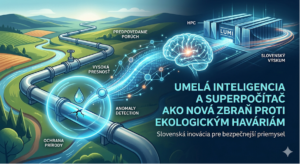 Artificial Intelligence and a Supercomputer as a New Weapon Against Environmental Disasters 26 Mar - Scientists from Nitra, Slovakia are teaching machines to predict industrial failures before they can cause damage. Thanks to collaboration with the European supercomputer LUMI, they have developed a digital “guardian” capable of detecting pipeline leaks or manufacturing faults with high accuracy—helping protect both the environment and companies’ budgets.
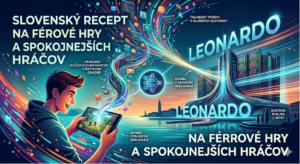 The Slovak Recipe for Fair Play and Happier Players 25 Mar - Do you play games on your phone and sometimes feel like the game just doesn’t understand you? Experts from Nitra, Slovakia, have used one of Europe’s most powerful supercomputers to change that. Thanks to the Italian giant named Leonardo, they discovered how to read between the lines of player behavior and make the gaming experience more personal and fair.
 Apply for the EUMaster4HPC Summer School 2026 focused on High-Performance Computing. 23 Mar - From 5 to 14 July 2026, the EUMaster4HPC Summer School titled “High-Performance Computing and Emerging Trends” will take place in Luxembourg. The event will be held at the Marienthal Youth Center and the University of Luxembourg in Belval.