
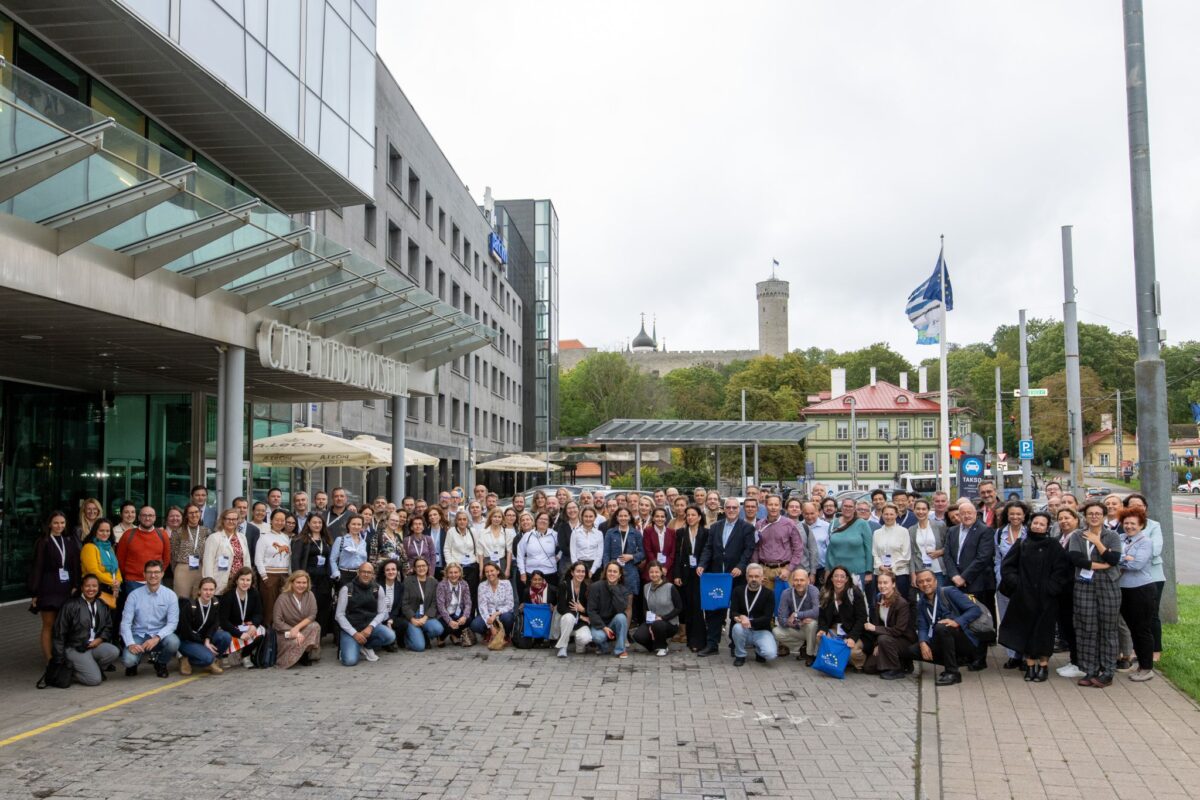
All Hands Meeting in Estonia
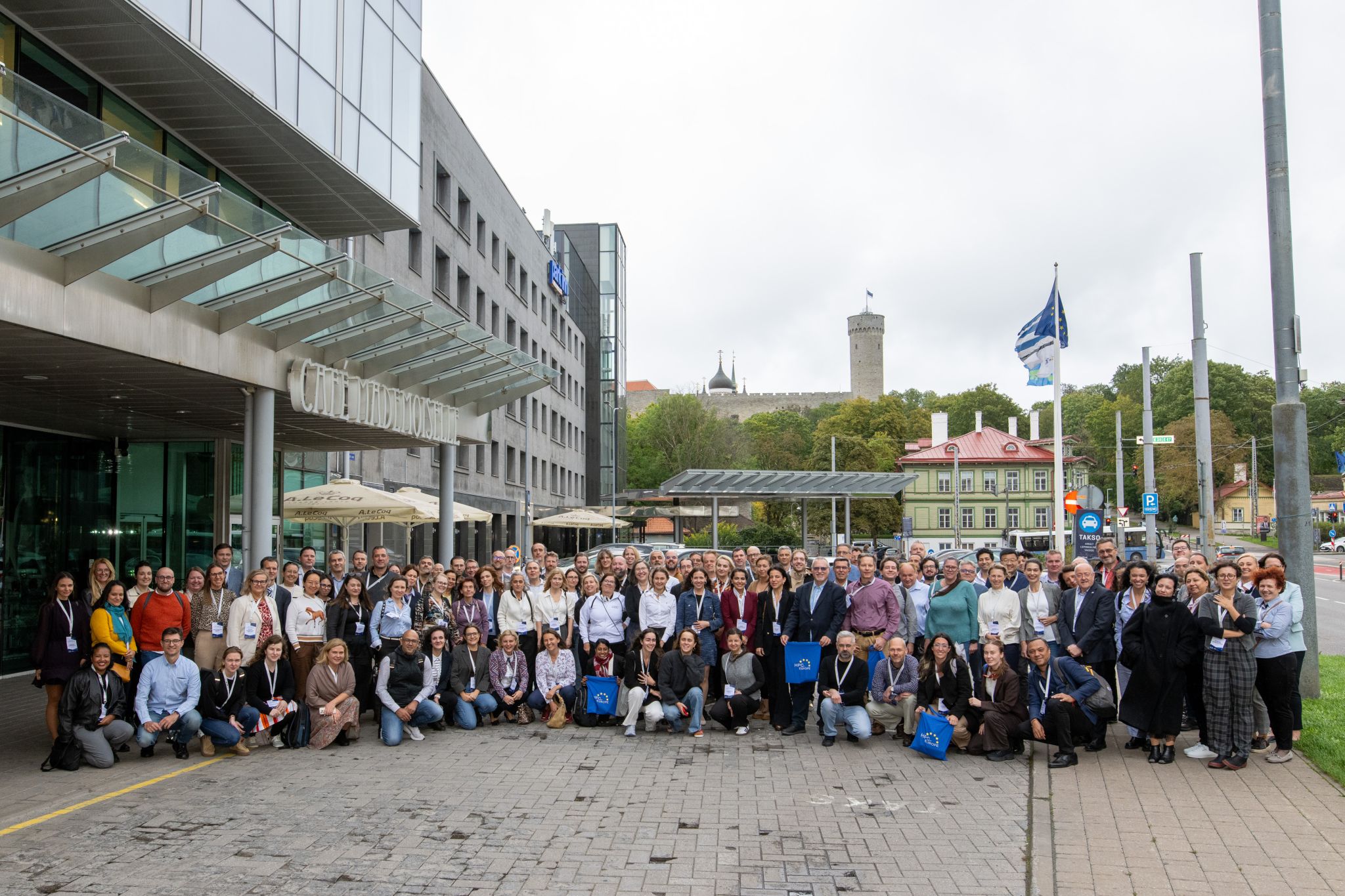
From 23 to 25 September 2025, representatives of the National Competence Centre for HPC, Halyna Hyryavets and Lucia Malíčková, took part in the final conference of the CASTIEL2, EuroCC2, EuroCC4SEE projects and the Centres of Excellence (CoEs), held in Tallinn, Estonia. The event brought together experts, representatives of national centres, and European CoEs to jointly discuss the future of high-performance computing in Europe, the sustainability of activities after the end of EuroHPC JU funding, and the preparation of the next phase of the EuroCC3 and CASTIEL3 initiatives.
The program included expert presentations on the status and progress of the projects, thematic working groups, and two extensive poster sessions where NCC Slovakia showcased its results. The poster highlighted activities in training and skills development in HPC, collaboration with industry and strategic partners, the HPC Ambassador Programme, and community building. We also presented our efforts to foster the adoption of HPC in Slovakia and across Europe, as well as our best practices in communication that enhance visibility and community engagement. The poster session sparked many inspiring discussions and new contacts, opening up opportunities for further collaborations.
In addition, Halyna Hyryavets participated as a speaker in the Pick my brain session where she presented NCC Slovakia’s successful experience with communication on social media. She focused particularly on the systematic use of LinkedIn and Instagram, which NCC Slovakia strategically employs for different target groups – professionals from industry, academia, and public administration on the one hand, and students and young researchers on the other. Her talk sparked interest in how digital platforms can be effectively used to build visibility and engage the community.
The conference also provided space for working groups focused on communication, training, and industry. These sessions offered opportunities to exchange experiences among partners from across Europe and to discuss how to further develop both national and international HPC ecosystems. Special attention was given to the sustainability of national competence centres after the conclusion of the current projects, with discussions on new forms of collaboration and links to the upcoming EuroCC3 initiative.
The program also included the workshop “Improving communication within a project team”, which provided practical recommendations for more effective communication in project teams and strengthened NCC Slovakia’s ability to apply these insights in everyday practice.
The participation of NCC Slovakia in the final conference in Tallinn significantly contributed to strengthening European cooperation, preparing for the upcoming project phases, and building international ties that will support the development of high-performance computing in Slovakia.
 Artificial Intelligence and a Supercomputer as a New Weapon Against Environmental Disasters 26 Mar - Scientists from Nitra, Slovakia are teaching machines to predict industrial failures before they can cause damage. Thanks to collaboration with the European supercomputer LUMI, they have developed a digital “guardian” capable of detecting pipeline leaks or manufacturing faults with high accuracy—helping protect both the environment and companies’ budgets.
 The Slovak Recipe for Fair Play and Happier Players 25 Mar - Do you play games on your phone and sometimes feel like the game just doesn’t understand you? Experts from Nitra, Slovakia, have used one of Europe’s most powerful supercomputers to change that. Thanks to the Italian giant named Leonardo, they discovered how to read between the lines of player behavior and make the gaming experience more personal and fair.
 Apply for the EUMaster4HPC Summer School 2026 focused on High-Performance Computing. 23 Mar - From 5 to 14 July 2026, the EUMaster4HPC Summer School titled “High-Performance Computing and Emerging Trends” will take place in Luxembourg. The event will be held at the Marienthal Youth Center and the University of Luxembourg in Belval.