
AI-Driven Archaeology with LLMs — Detecting Archaeological Sites from Aerial Imagery
Discover how artificial intelligence and large language models are redefining the way we uncover traces of the past.
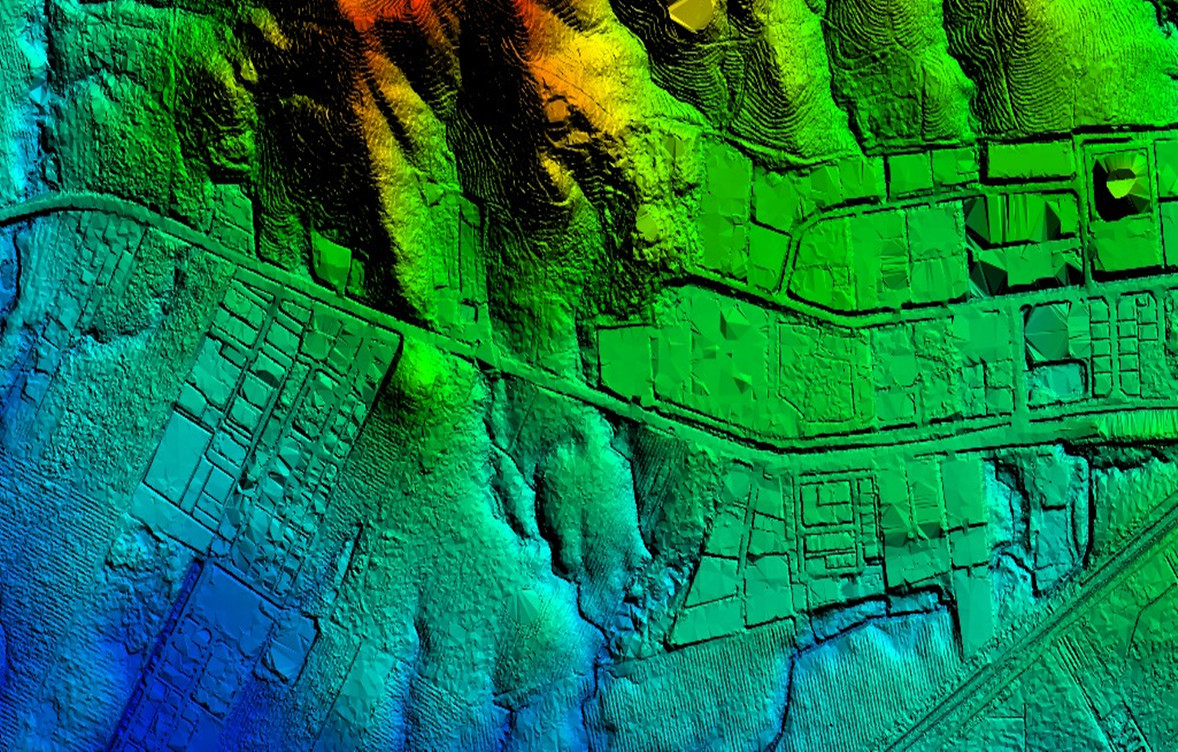
This webinar will explore how advanced AI techniques, inspired by LLMs, can analyse aerial and LiDAR imagery to detect archaeological sites with unprecedented precision. Dr. Daniel Canedo from the University of Aveiro will present real-world use cases where Vision Transformers and multimodal learning reveal hidden patterns in the landscape — bridging technology and cultural heritage.
Date and Time:
Tuesday, November 18th, 2025 | 10:00 AM CEST (9:00 PT)
Online | Free Registration
This webinar is organized by the Slovak National Supercomputing Centre as part of the EuroCC project (National Competence Centre – NCC Slovakia) in cooperation with NCC Portugal , within the LLM Webinar Series connecting high-performance computing with artificial intelligence, culture, and innovation. The webinar will be held in English.
The webinar will be held in English.
Abstract:
Archaeological site detection is entering a new era thanks to advances in remote sensing and artificial intelligence. Archaeological sites such as hillforts often have irregular and complex shapes, making them difficult to identify using conventional computer-vision methods. Multimodal approaches that combine LiDAR-derived LRM images with aerial orthoimagery improve detection accuracy, but false positives remain a major challenge.
This presentation explores how Vision Transformers and LLM-inspired architectures can address these limitations. By using cross-modal attention mechanisms, these models integrate multiple data sources to enable precise boundary detection, reduced false positives, and scalable application across diverse landscapes and site types. A key element of this workflow is a human-in-the-loop refinement process, in which archaeologists review and provide feedback on model predictions. This iterative collaboration enriches the training data, enhances the model’s ability to distinguish true sites from background anomalies, and increases overall detection reliability.
Results from Northwest Iberia show a 99.3% reduction in false positives after a single refinement cycle, while nationwide deployment in England demonstrates robust performance across varied site morphologies. Combining multimodal fusion, transformer-based architectures, and expert-guided refinement, this approach delivers both accuracy and interpretability. The talk will conclude with insights into predictive modelling for identifying high-potential areas, accelerating large-scale archaeological surveys, and improving efficiency in heritage mapping.
Speaker:
Dr. Daniel Canedo – Research Fellow, Institute of Electronics and Informatics Engineering of Aveiro, University of Aveiro
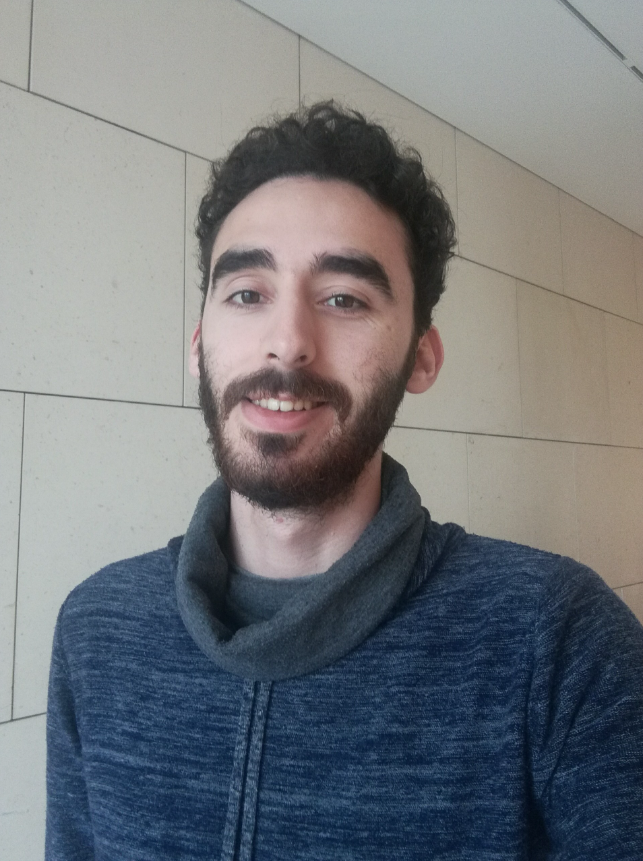
Dr. Daniel Canedo received his Ph.D. in Computer Engineering from the University of Aveiro, Portugal, in 2024. Since 2017, he has been a Research Fellow with the Institute of Electronics and Informatics Engineering of Aveiro (IEETA). His research interests include computer vision and artificial intelligence, with a particular focus on their applications to complex pattern detection and image-based reasoning.
He has published in several international journals and conference proceedings and was awarded first place in the NATO StratCom Competition „How to detect malicious use of video and/or photographic content online” (December 2018, Riga, Latvia).
Topics Include:
- Vision Transformers and multimodal AI for archaeological mapping
- Combining LiDAR and aerial imagery for site detection
- Human-in-the-loop feedback for improved model accuracy
- Case studies: Burial mounds and hillforts in Northwest Iberia and England
- Reducing false positives through cross-modal learning
- Predictive modelling and future directions
Outline:
- Introduction and Motivation
- Vision Transformers: Extending the LLM Architecture to Image Processing
- The Challenges of Detecting Archaeological Sites from Aerial Imagery
- Use Case 1 – Burial Mounds: methodology, results, lessons learned
- Use Case 2 – Hillforts: metodology, results, lessons learned
- Conclusion and future directions
- Discussion and Q&A
 Keď hmla nečakane udrie 22 Aug - Ako včas odhaliť hmlu ako „neviditeľnú“ hrozbu skôr, než ochromí naše cesty?
 Stop digitálnym pochlebovačom 16 Aug - Vedkyňa pomocou superpočítača prelomila zvyk modelov AI len prázdne chváliť a naučila ich dávať úprimnú, kritickú spätnú väzbu
 Odvrátená strana bezplatných hier 11 Jul - Ako slovenský tím s pomocou superpočítača vyriešil rébus extrémne vzácneho správania hráčov