
Success story: When a production line knows what will happen in 10 minutes
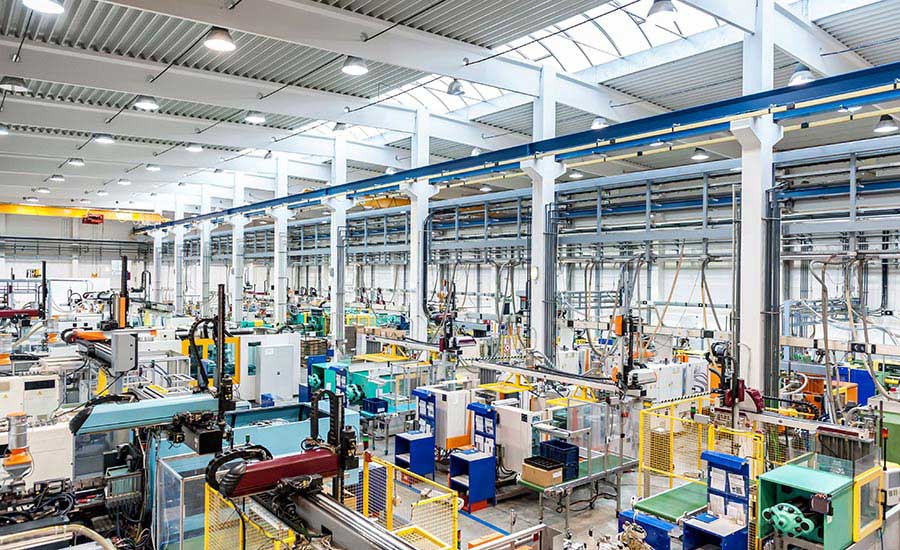
Every disruption on a production line creates stress. Machines stop, people wait, production slows down, and decisions must be made under pressure. In the food industry—especially in the production of filled pasta products, where the process follows a strictly sequential set of technological steps—one unexpected issue at the end of the line can bring the entire production flow to a halt.
But what if the production line could warn in advance that a problem will occur in a few minutes? Or help decide, already during a shift, whether it still makes sense to plan packaging later the same day? These were exactly the questions that stood at the beginning of a research collaboration that brought together industrial data, artificial intelligence, and supercomputing power.
The research was carried out by an international team of experts in artificial intelligence and industrial analytics from both academia and the private sector. The project involved the company Prounion a.s. in cooperation with Constantine the Philosopher University in Nitra, as well as additional academic partners from the Czech Republic and Hungary.
Challenge
Modern production lines generate enormous volumes of data—from machine states and operating speeds to temperatures and production counts. Despite this, key operational decisions are still often made based on experience and intuition.
The researchers focused on a real production line for filled pasta products, where the product passes through a fixed sequence of machines—from raw material preparation, through forming and filling, to thermal processing and packaging. They identified two decisions with a critical impact on production efficiency:
- Early warning: Is it possible to predict whether the packaging machine will stop within the next 10 minutes?
- In-shift planning: Can it be reliably determined during the working day whether packaging will still take place later the same day?
Answering these questions required working with large volumes of time-series data while strictly respecting real production conditions—models were allowed to use only the information that is genuinely available at a given moment to an operator or shift supervisor.
Solution
The research team first unified data from all machines into a single time axis and processed it to accurately reflect the real operation of the production line. They then developed machine-learning models that worked exclusively with information available at the given moment—exactly as an operator or shift manager would have it in practice.
A key milestone of the project was access to high-performance computing resources. NSCC Slovakia facilitated access for the research team to the European EuroHPCsupercomputing infrastructure, specifically to the Karolina supercomputer in the Czech Republic. This made it possible to rapidly experiment with different models, test them on real production days, and validate their behavior under conditions close to real industrial practice.
The supercomputer thus became not just a technical tool, but a key driver of innovation, enabling the transition from theoretical analytics to decisions that can be used in real operations.
Results
The model focused on early warning of packaging machine stoppages achieved very high accuracy. It was able to reliably identify situations in which a stoppage was likely within the next 10 minutes, while keeping the number of false alarms to a minimum. This means the alerts are trustworthy and do not overwhelm operators with unnecessary warnings.
The second model, designed for in-shift planning, was able with high reliability to determine whether packaging would still take place later the same day. Managers thus gained a practical basis for decisions related to staffing, work planning, and efficient use of time.
Both approaches share a common principle: they do not predict abstract numbers, but instead answer concrete questions that production teams face every day.
Impact and future potential
This success story shows that artificial intelligence in industry does not have to be a futuristic experiment. When analytics is focused on real operational decisions and supported by the right infrastructure, it can become a quiet and reliable assistant to production.
The solution is easily extendable to other production lines and sectors. Looking ahead, additional data—such as product types, planned maintenance, or shift schedules—can be integrated, allowing models to be even more precisely tailored to the specific needs of companies.
The key message is clear:
When data, artificial intelligence, and supercomputers are aligned with real industrial needs, the result is solutions with immediate practical value.
 Artificial Intelligence and a Supercomputer as a New Weapon Against Environmental Disasters 26 Mar - Scientists from Nitra, Slovakia are teaching machines to predict industrial failures before they can cause damage. Thanks to collaboration with the European supercomputer LUMI, they have developed a digital “guardian” capable of detecting pipeline leaks or manufacturing faults with high accuracy—helping protect both the environment and companies’ budgets.
 The Slovak Recipe for Fair Play and Happier Players 25 Mar - Do you play games on your phone and sometimes feel like the game just doesn’t understand you? Experts from Nitra, Slovakia, have used one of Europe’s most powerful supercomputers to change that. Thanks to the Italian giant named Leonardo, they discovered how to read between the lines of player behavior and make the gaming experience more personal and fair.
 Apply for the EUMaster4HPC Summer School 2026 focused on High-Performance Computing. 23 Mar - From 5 to 14 July 2026, the EUMaster4HPC Summer School titled “High-Performance Computing and Emerging Trends” will take place in Luxembourg. The event will be held at the Marienthal Youth Center and the University of Luxembourg in Belval.