
Recording of the Webinar: Use of HPC at the Slovak Hydrometeorological Institute
Thank you to everyone who attended the expert online lecture Use of HPC at the Slovak Hydrometeorological Institute, led by Mgr. Mária Derková, PhD., from the Slovak Hydrometeorological Institute.
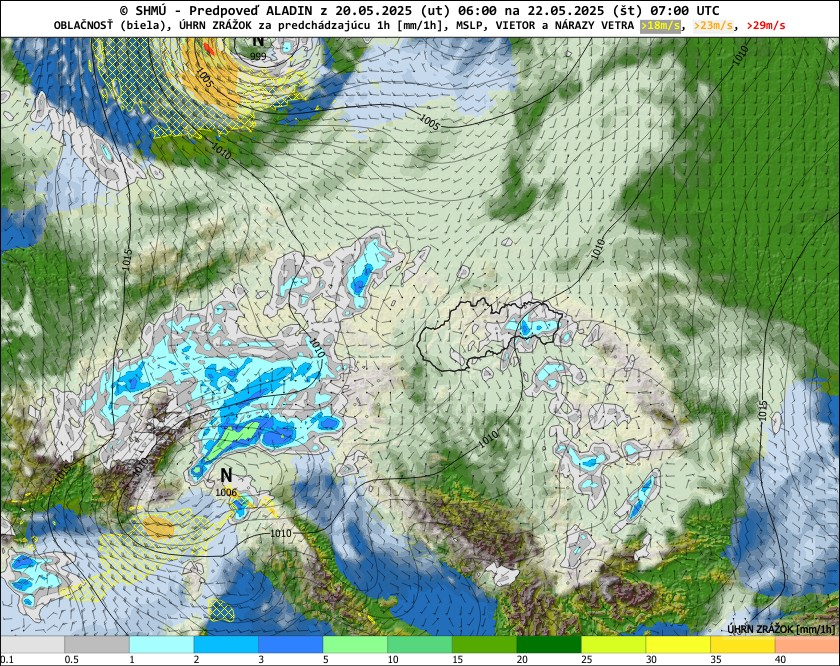
The lecture provided insights into how the Slovak Hydrometeorological Institute (SHMÚ) has been using the high-performance computing system NEC-LX (in operation since 2021), primarily for numerical weather prediction with the ALADIN model. Various configurations of the model and its broader applications were presented – including climatological and hydrological models, as well as models for air quality analysis and forecasting. The presentation also covered the processing of data from radars and satellites, along with a discussion on the potential for expanding HPC use to nowcasting, ensemble forecasting, and AI/ML techniques.
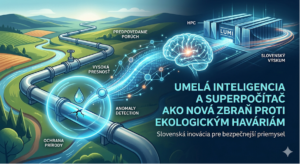 Artificial Intelligence and a Supercomputer as a New Weapon Against Environmental Disasters 26 Mar - Scientists from Nitra, Slovakia are teaching machines to predict industrial failures before they can cause damage. Thanks to collaboration with the European supercomputer LUMI, they have developed a digital “guardian” capable of detecting pipeline leaks or manufacturing faults with high accuracy—helping protect both the environment and companies’ budgets.
 The Slovak Recipe for Fair Play and Happier Players 25 Mar - Do you play games on your phone and sometimes feel like the game just doesn’t understand you? Experts from Nitra, Slovakia, have used one of Europe’s most powerful supercomputers to change that. Thanks to the Italian giant named Leonardo, they discovered how to read between the lines of player behavior and make the gaming experience more personal and fair.
 Apply for the EUMaster4HPC Summer School 2026 focused on High-Performance Computing. 23 Mar - From 5 to 14 July 2026, the EUMaster4HPC Summer School titled “High-Performance Computing and Emerging Trends” will take place in Luxembourg. The event will be held at the Marienthal Youth Center and the University of Luxembourg in Belval.