
Supercomputers (not only) in science
We continue into the summer semester with a series of lectures on how scientists use supercomputers in their research. The National Competence Centre for HPC in cooperation with the Computing Centre and the Computer Museum of the Centre of Operations of the Slovak Academy of Sciences, organizes a series of popularization lectures on the use of supercomputers in various scientific disciplines. We will welcome a number of speakers not only from the Slovak Academy of Sciences, but also from Slovak universities and other institutions.
Part of the lectures is planned as a sequence focusing on the applications of Machine Learning (ML) and Artificial Intelligence (AI). Come and listen to Slovak experts and take the opportunity to discuss with them in an informal atmosphere!
We would like to invite scientists, students and also the general public - all those who are interested in the topic of supercomputing. Research and development relying on high-performance calculations has multidisciplinary character and the knowledge of the basic modeling and simulation methods, programming languages and operating systems can be of a great advantage. This semester we will first look at the quantum Monte Carlo methods, considered very promising for utilizing the next generation exascale supercomputers. We will learn about the important role the high performance computers play in weather forecasting. Subsequently, we will focus on machine learning and artificial intelligence topic with lectures covering the basics as well as specific applications.
We plan to organize the lectures in a hybrid mode so it is possible to attend them in person. However, due to the unpredictable pandemic situation and constantly changing rules for mass events, we will inform you about the lecture format via our website and social networks approximately one week before each individual event.
You may look forward to the following lectures and speakers - and we look forward to see you!
- Modelling of 2D systems properties using the Quantum Monte Carlo methods – Ivan Štich z Fyzikálneho ústavu SAV (15. februára)
- Use of HPC in operational weather forecast in Slovakia - Jozef Vivoda from the Slovak Hydrometeorological Institute (March 1)
- Introduction to artificial neural networks and evolutionary algorithms – Ivan Sekaj z Ústavu robotiky a kybernetiky, FEI STU (15. marca)
- Deep learning and its basic applications for computer vision – Andrej Lúčny z Katedry informatiky FMFI UK (29. marca)
- Úvod do aplikácií zložitých výpočtov v medicíne – Zuzana Černeková z oddelenia počítačovej grafiky a videnia, Katedra aplikovanej informatiky FMFI UK a Peter Bluska z Rádiológia s.r.o. (12. apríla)
- TheUse of ML / AI for applications in chemistry - potential drugs on Covid-19 – Marián Gall z Výpočtového strediska SAV (26. apríla)
- Current problems of reinforcement learning – Michal Chovanec zo spoločnosti Tachyum (10. mája)
- Natural and artificial intelligence – Tomáš Hrodmádka z Neuroimunologickeho ústavu SAV (24. mája)
 Konferencia Forbes Lepšie Slovensko 16 Sep - Konferencia Forbes Lepšie Slovensko patrí k najvýznamnejším platformám otvárajúcim diskusiu o modernej budúcnosti našej krajiny.
  Keď hmla nečakane udrie 22 Aug - Ako včas odhaliť hmlu ako „neviditeľnú“ hrozbu skôr, než ochromí naše cesty?
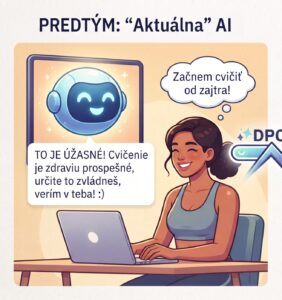 Stop digitálnym pochlebovačom 16 Aug - Vedkyňa pomocou superpočítača prelomila zvyk modelov AI len prázdne chváliť a naučila ich dávať úprimnú, kritickú spätnú väzbu