

How can NLP improve your business?
We would like to invite you to a popularization lecture focused on Natural Language Processing. NLP refers to a branch of computer sciences—and more specifically the branch of artificial intelligence or AI—concerned with giving computers the ability to understand text and spoken words in much the same way human beings can. This method is also used by currently very popular ChatGPT.
The aim of the lecture is to provide a comprehensive view on NLP and outline the potential of its use for small and medium-sized enterprises. Marek Šuppa from the Comenius University and Slido company will introduce you to NLP.

During the lecture we will talk about:
- What are modern language models and how are they created?
- How these models can be used practically?
- How much does it cost to train and operate such models?
- Aké sú očakávania od NLP v budúcnosti.
The event will take place online on April 3 from 5:00 p.m.
The number of places is limited and registration mandatory.
 Konferencia Forbes Lepšie Slovensko 16 Sep - Konferencia Forbes Lepšie Slovensko patrí k najvýznamnejším platformám otvárajúcim diskusiu o modernej budúcnosti našej krajiny.
  Keď hmla nečakane udrie 22 Aug - Ako včas odhaliť hmlu ako „neviditeľnú“ hrozbu skôr, než ochromí naše cesty?
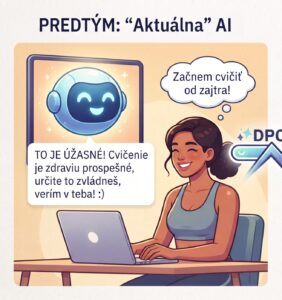 Stop digitálnym pochlebovačom 16 Aug - Vedkyňa pomocou superpočítača prelomila zvyk modelov AI len prázdne chváliť a naučila ich dávať úprimnú, kritickú spätnú väzbu