
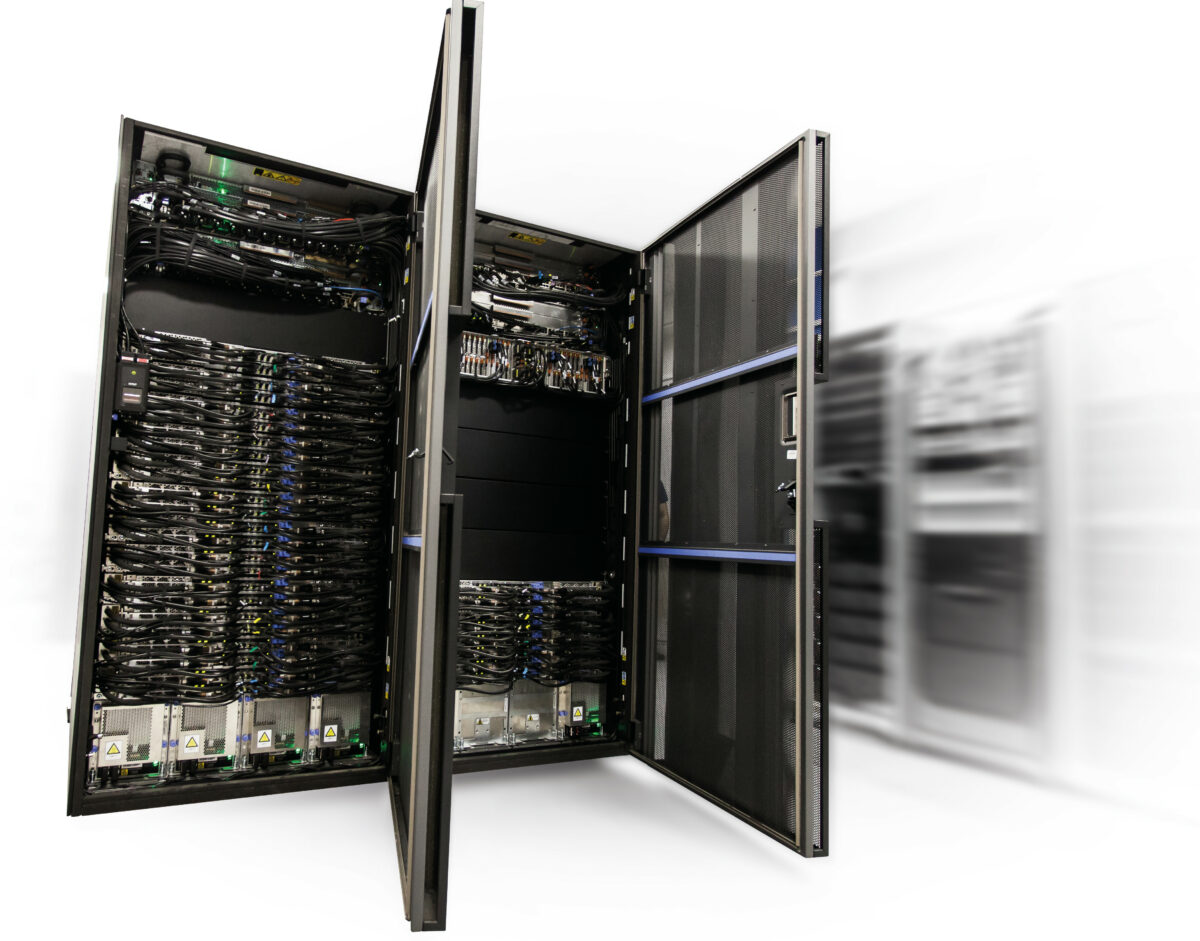
Slovakia will have a new supercomputer this year
Centre of Operations of the SAS has signed a contract with a supplier of a new high-performance computing system, which should be put into operation later this year. The investment in the purchase of the Devana supercomputer with an estimated output of 800 TFlops is financed from the Operational Programme Integrated Infrastructure (OPII).
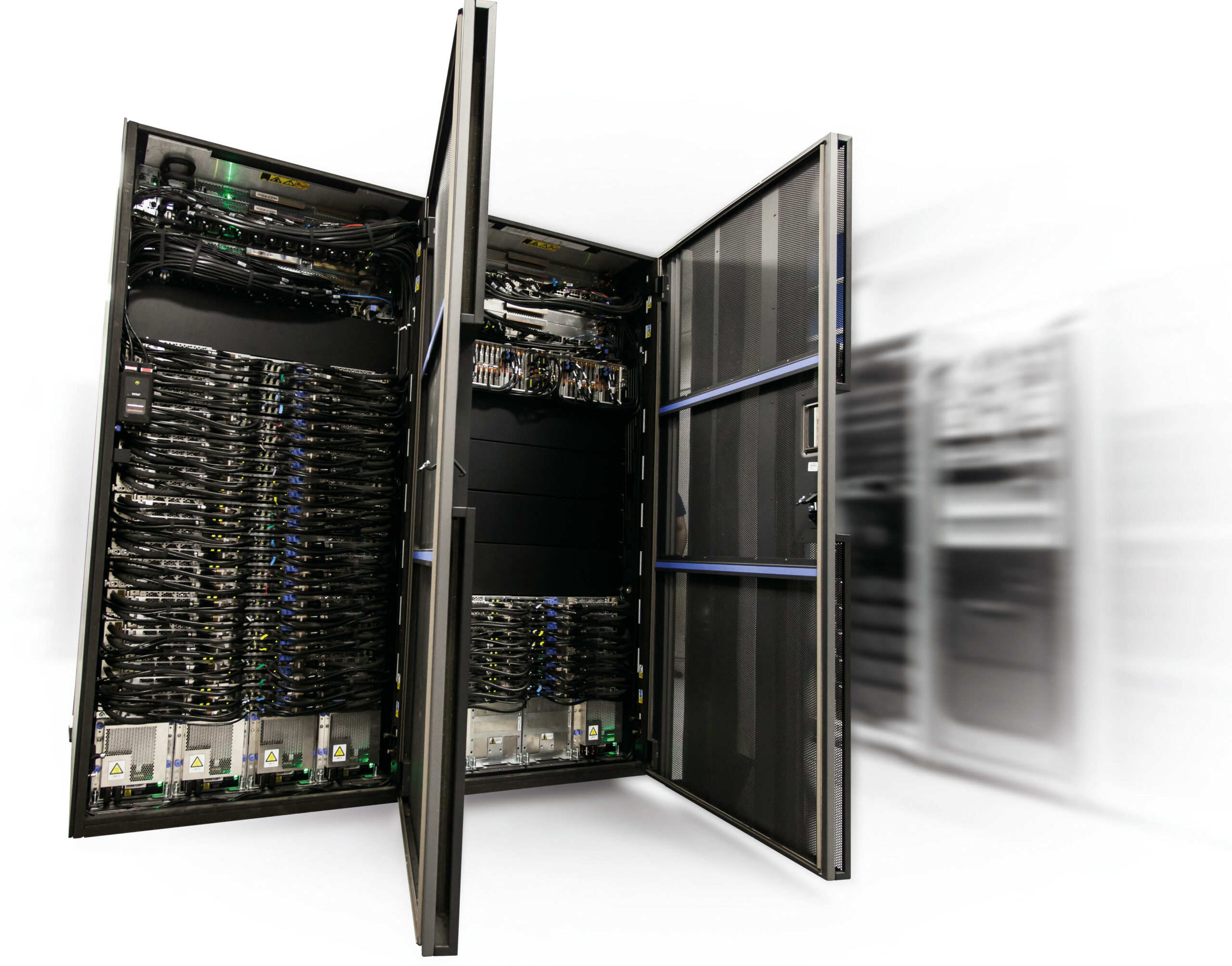
The new supercomputer, which will help Slovakia partially reduce its investment debt in the field of HPC (HPC = high performance computing), will be accessible to scientists and researchers from the Slovak Academy of Sciences, all public universities and also Slovak entrepreneurs and public administration institutions. Small and medium-sized enterprises and public administration can also use the free services of the National Competence Center (NCC) for HPC, consult on the deployment of solutions based on HPC and implement testing and so-called proof-of-concept projects. NCC supports the adoption of HPC tools in the areas of demanding numerical simulations, high-performance data analytics (HPDA), artificial intelligence (AI) and machine learning (ML).
The entire Devana system has a purchase price of approximately EUR 2 million and will be installed - similarly to its predecessor Aurel - on the premises of the Computing Centre of the SAS at Bratislava Patrónka. The solution from Lenovo, which will be delivered by IXPERTA, will contain 2 modules - a CPU part and an accelerated part suitable especially for AI / ML applications. The CPU part will have 140 computing servers with 64 cores and 256 GB of RAM; in the accelerated part there will be 8 computing nodes, each equipped with 4 GPGPU Nvidia A100 cards. The high-speed connection will be provided by 100 Gbps Infiniband and users will also have data storage with a size of 3.8 PB.
The announcement of grant competitions and the management of applications for access to computing resources will be the responsibility of the National Supercomputing Center (NSCC). Public universities and public administration organizations can become members of the NSCC, whose role is to cover and support activities in the field of HPC in Slovakia, and thus participate in building the HPC ecosystem, develop cooperation in individual application areas at the expert level and represent the interests of its users. The Devana supercomputer can thus become a technological platform for the support of innovation and digital transformation in Slovakia with the involvement of the academic, public and private sectors. At the same time, the Slovak HPC ecosystem will prepare for further infrastructure investments from the Recovery and Resilience Plan.
The Operational Programme Integrated Infrastructure (OPII) is funded by the European Regional Development Fund and this project (311071AKF20) was supported under the OPII-2020/7/55-NP call.
 Artificial Intelligence and a Supercomputer as a New Weapon Against Environmental Disasters 26 Mar - Scientists from Nitra, Slovakia are teaching machines to predict industrial failures before they can cause damage. Thanks to collaboration with the European supercomputer LUMI, they have developed a digital “guardian” capable of detecting pipeline leaks or manufacturing faults with high accuracy—helping protect both the environment and companies’ budgets.
 The Slovak Recipe for Fair Play and Happier Players 25 Mar - Do you play games on your phone and sometimes feel like the game just doesn’t understand you? Experts from Nitra, Slovakia, have used one of Europe’s most powerful supercomputers to change that. Thanks to the Italian giant named Leonardo, they discovered how to read between the lines of player behavior and make the gaming experience more personal and fair.
 Apply for the EUMaster4HPC Summer School 2026 focused on High-Performance Computing. 23 Mar - From 5 to 14 July 2026, the EUMaster4HPC Summer School titled “High-Performance Computing and Emerging Trends” will take place in Luxembourg. The event will be held at the Marienthal Youth Center and the University of Luxembourg in Belval.