

Webinar: Supercomputing Services for Enterprises
The webinar "Supercomputing services for Enterprises" was organized by the American Chamber of Commerce (AmCham Slovakia). The event took place online on July 7, 2022. What services can supercomputers provide for SMEs, large enterprises, or the public sector? The webinar ""Supercomputing services for Enterprises" was dedicated to these questions. Speakers during the webinar explained not only who can use high-performance computing services, but also how to access them.

Today, supercomputing enables industrial sectors to become more innovative, productive and shift business to a higher level. The advantages of using HPC start with a more precise design of complex work pieces, continue with speeding-up the time-to-market, and conclude with the cost-saving of materials and time savings which could be spent for further R&D.
HPC services are now available to Slovak SMEs and industry at the National competence centre for HPC. Slovak National Supercomputing Centre National Supercomputing Center - NSCC and National competence centre for HPC.
- Lucia Demovičová – National Competence Centre for HPC
- Lukáš Demovič – National Supercomputing Centre
- Michal Číž – Ministry of Investments, Regional Development and Informatization of the Slovak Republic
Currently, the Ministry of Investments, Regional Development and Informatization of SR is realizing a project aimed at the creation of a sustainable ecosystem of high performance computing, which will operate the supercomputer for the Slovak National Supercomputing Centre. The existence of such an ecosystem will benefit Slovakia’s innovation potential and increase cooperation between the public sector, private sector and research and academia.
The National Competence Center for HPC carries out a survey of competences and needs in the field of high-performance computing and the use of HPC+ solutions. Entrepreneurs, public and academic institutions can participate in the nationwide survey.
 Keď hmla nečakane udrie 22 Aug - Ako včas odhaliť hmlu ako „neviditeľnú“ hrozbu skôr, než ochromí naše cesty?
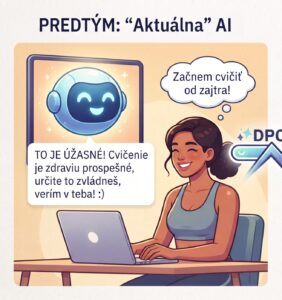 Stop digitálnym pochlebovačom 16 Aug - Vedkyňa pomocou superpočítača prelomila zvyk modelov AI len prázdne chváliť a naučila ich dávať úprimnú, kritickú spätnú väzbu
 Odvrátená strana bezplatných hier 11 Jul - Ako slovenský tím s pomocou superpočítača vyriešil rébus extrémne vzácneho správania hráčov