Kategórie
General

The National competence centre pilot hackathon

The National competence centre pilot hackathon

Vymyslieť tému pilotného NCC hackathonu nebolo ľahké: HPC prostredie má svoje špecifiká a je pre mnoho ľudí celkom neznáme. Napokon sme sa rozhodli pre výzvu, ktorá by riešila niečo, čo poznáme a používame všetci: mobilnú aplikáciu. Konkrétne tá naša by mala prinášať používateľom HPC prehľad o ich výpočtových úlohách a stave výpočtových prostriedkov.

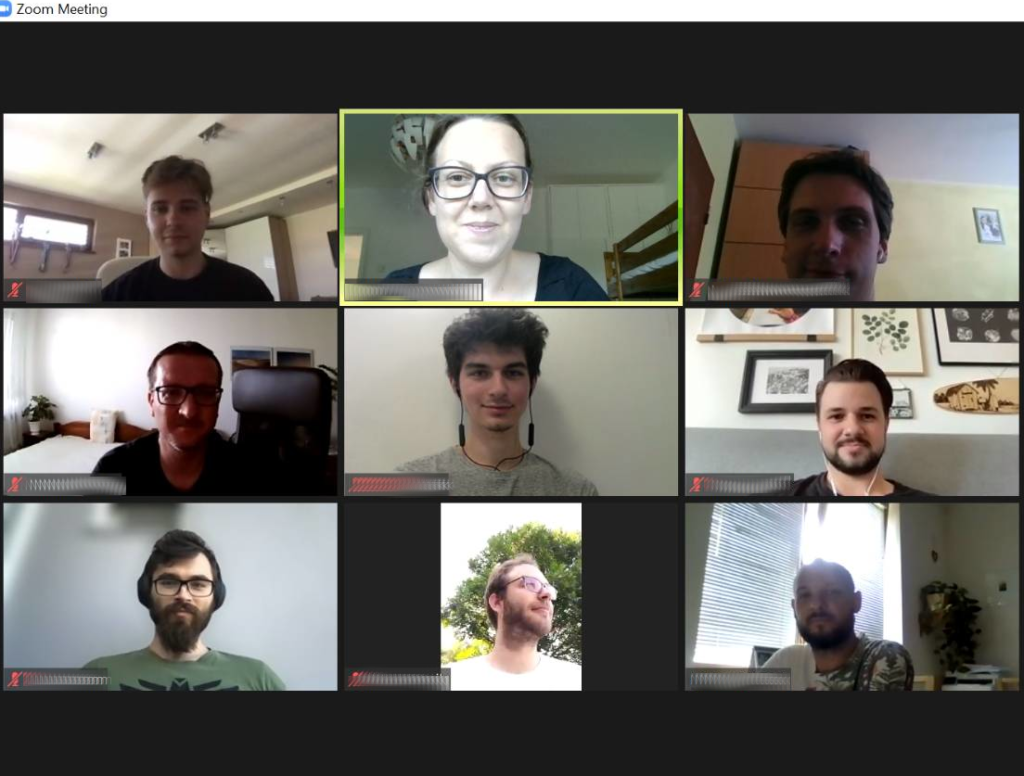
Organizátori z Národného kompetenčného centra pripravili tzv. backend aplikácie a umožnili účastníkom prístup k potrebným dátam priamo z klastra situovaného v Košiciach, kde si mohli sami spúšťat aj testovacie úlohy. HPC prostredie, výpočty a ich manažment pomocou nástroja SLURM sme priblížili na úvodnom webinári a 9. júla sa online hackathon mohol začať. Každý z dvoch tímov, ktoré sa aktívne zúčastnili, si zvolil iný prístup k vývoju: PWA (Progressive Web App) a Kotlin multiplatform. Obom tímom musíme uznať, že výborne uchopili projekt a výsledné riešenia a ich prezentácia sa nám veľmi páčili. Víťazná aplikácia by mala fungovať na zariadeniach s Androidom i iOS a dúfame, že po finálnych úpravách ju čoskoro budú môcť otestovať naši aj používatelia!

We also thank our partners and sponsors for media support and prizes. Big thank you to QuBit Academy, WebSupport, Cybersec.skLearn2Code, Slovak Academy of Sciences from bart.sk!

Keď AI klope na bránu teológie 11 Jun - Prečo umelá inteligencia patrí aj do teológie?
Nový recept na skrotenie slnečnej energie 11 Jun - Umelá inteligencia v spojení s čistou fyzikou dokáže predpovedať silu slnečného žiarenia rýchlejšie a lacnejšie než kedykoľvek predtým
Chceš študovať superpočítače? 7 May - Zvažuješ magisterské štúdium a láka ťa svet vysokovýkonných výpočtov, umelej inteligencie a dátovej vedy?
Kategórie
General

National video games day

National video games day

Today, video games are an inseparable part of the life for a large amount of the population. We prepared several interesting facts about this phenomenon for today's National Video Game Day. The first video game is considered to be an artificial intelligence called Bertie the Brain, which was able to play Tic-tac-toe.  

This device was assembled in 1950 by Josef Kates to be exhibited at the Canadian National Exhibition. The first gaming device was up to 4 meters high, which is why it was never mass-produced. After the Canadian National Exhibition, no other piece was made again. Another computer adapted for playing a game was the Nimrod, which was introduced at the Festival of Britain in 1951. Nimrod and Bertie the Brain can be considered the founders of the world of video games in the form as we know it today. 

In the process of creating video games, an original idea is essential. At the beginning, it is important to know what type of game you want to create, whether it will be a sports game, action or logic game. The creator of the video game must have an idea of the story, the length of the game, the budget and the levels of complexity. An important step is the right choice of software that will make the work easier for developers. The longest-lasting phase in the creation of the game is the creation itself - designing the environment and individual characters. Creating a video game is a demanding and lengthy process, the most pleasant part of which is the publication of the game.

We often come across the opinion that video games have a negative impact on the players. A group of scientists under the expert guidance of Marc Palaus looked at it and Scientists have found out that video game players have better-developed areas of the brain which are responsible for concentration and spatial perception. Those who play video games regularly can better perceive the relationships between individual objects in space, and also fine motor skills improve.

It is also important to remember the risks involved that can strongly affect people's lives. Even though gambling is the most common form of addiction, one can also be addicted to video games. Scientists have found out, že ľudia náchylní na závislosť na videohrách majú spoločné zmeny v štruktúre mozgu – pozmenený je ich nervový systém odmeňovania. Ide o skupinu štruktúr, ktorá je zodpovedná za prijemný pocit po úspešnom dosiahnutí stanovených cieľov. Na základe týchto výskumov môžeme tvrdiť, že je možné predpovedať, kto má väčšiu pravdepodobnosť stať sa závislým na videohrách.

However, we must not forget the positives, which, in addition to better spatial perception and improved fine motor skills, also include the development of certain skills that people have a problem with. It is important to mention games which are intended specifically to help people after strokes. These support re-learning of certain skills and also help the rehabilitation process.

A specialised museum is available for all those interested in video games on the premises of the Slovak Academy of Sciences in Bratislava The computer museum exhibits the first computers, telephones and graphics, or older models of game consoles and controllers. Functional machines are also available for trying out!

Keď AI klope na bránu teológie 11 Jun - Prečo umelá inteligencia patrí aj do teológie?
Nový recept na skrotenie slnečnej energie 11 Jun - Umelá inteligencia v spojení s čistou fyzikou dokáže predpovedať silu slnečného žiarenia rýchlejšie a lacnejšie než kedykoľvek predtým
Chceš študovať superpočítače? 7 May - Zvažuješ magisterské štúdium a láka ťa svet vysokovýkonných výpočtov, umelej inteligencie a dátovej vedy?
Kategórie
General

EuroCC & Castiel joint coference

EuroCC & Castiel Joint conference

Second joint conference EuroCC & Castiel took place on June 22 – 23, 2021. The two-day online event was attended by 140+ representatives and members of all National Competence Centres. The programme of the conference focused on the upcoming 1st year reports and a review process that will take place in October 2021.  

Administrative issues were addressed by the Project Management Team and representatives from the Castiel working groups presented progress in their respective areas: competence mapping, training, twinning&mentoring, industrial interactions and business development and communication & outreach. An update from the EuroHPC JU was presented, as well. On the second day the participants learned more about the FF4EuroHPC open call.

Most importantly, the joint conference was an opportunity for all NCCs to present their progress in the first 9 months of the EuroCC project implementation, from their initial status to goals achieved and the future outlook.

Keď AI klope na bránu teológie 11 Jun - Prečo umelá inteligencia patrí aj do teológie?
Nový recept na skrotenie slnečnej energie 11 Jun - Umelá inteligencia v spojení s čistou fyzikou dokáže predpovedať silu slnečného žiarenia rýchlejšie a lacnejšie než kedykoľvek predtým
Chceš študovať superpočítače? 7 May - Zvažuješ magisterské štúdium a láka ťa svet vysokovýkonných výpočtov, umelej inteligencie a dátovej vedy?
Kategórie
General

National Competence Centre for HPC at the spring edition of ITAPA 2021

National Competence Centre for HPC at the spring edition of ITAPA 2021

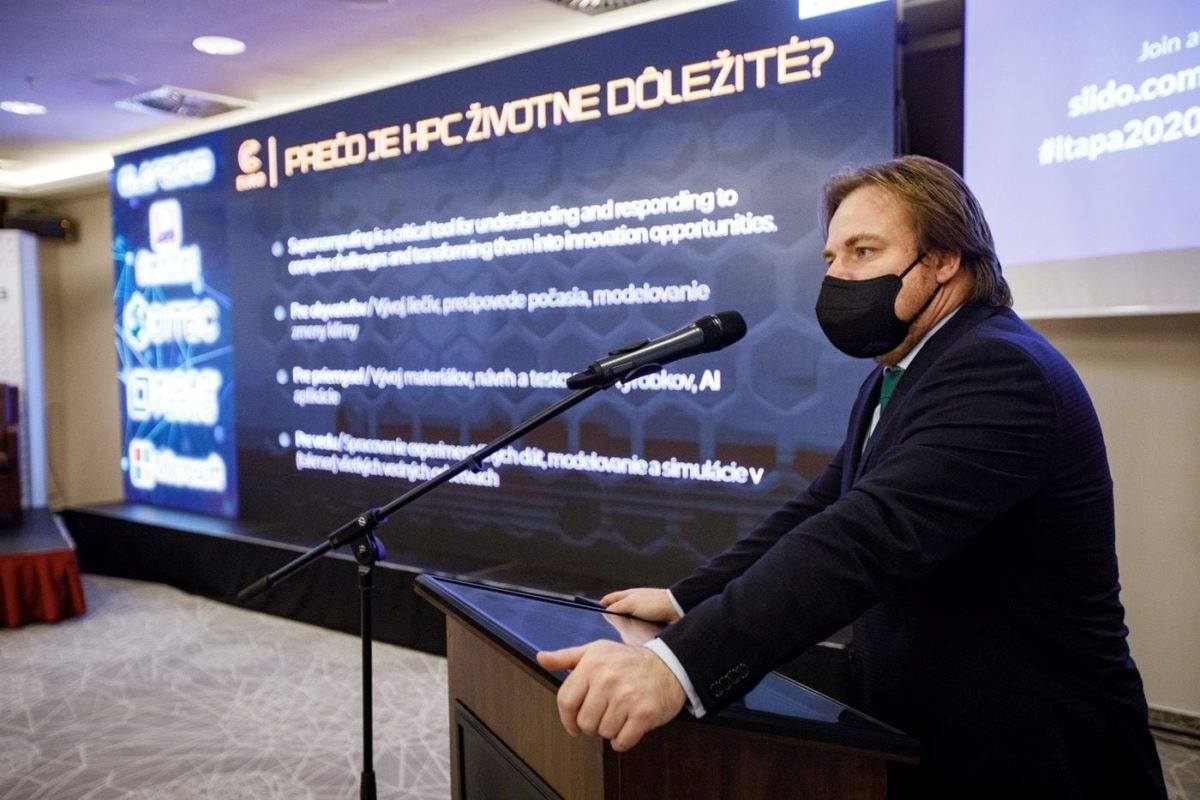
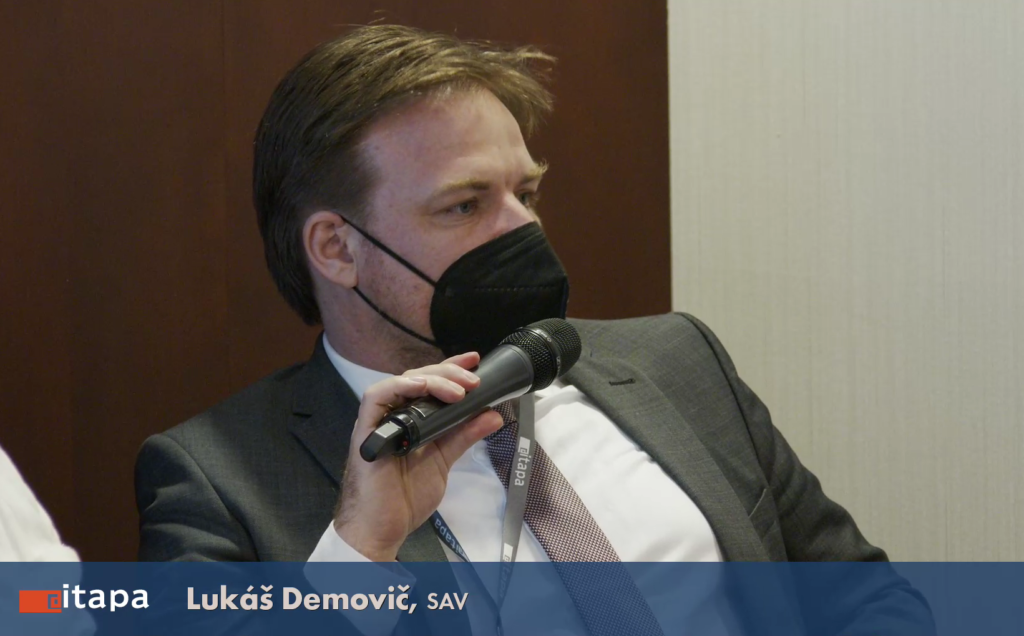
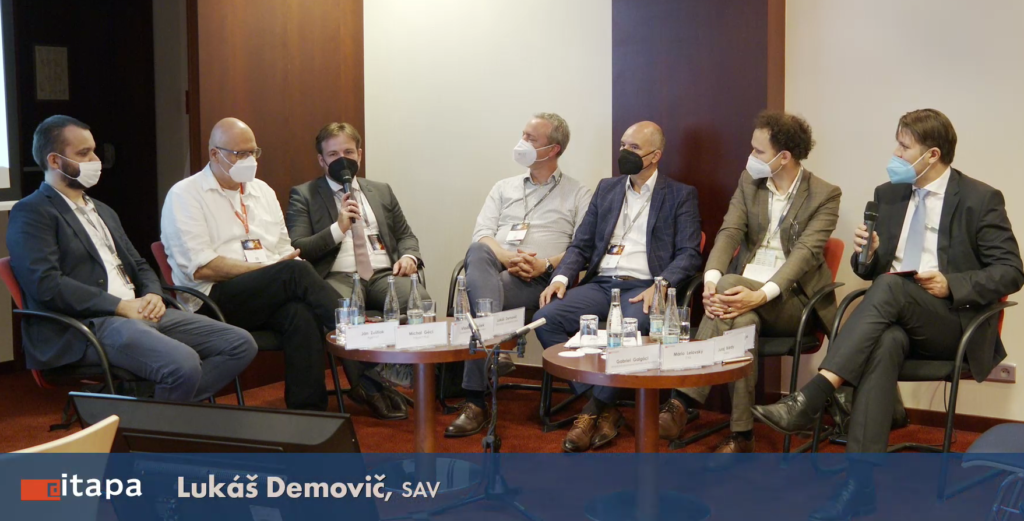
The spring edition of the largest IT conference in Slovakia - ITAPA- took place in Bratislava on June 10, 2021. The EuroCC project. project and the National Competence Center for High-Performance Computing was again represented at this event. Lukáš Demovič, director of the Centre of Operations of the Slovak Academy of Sciences and Chairman of the Board of the National Supercomputing centre (NSCC) took part in a session about Digital Economics.

Radoslav Repa, Director General of the Digital Agenda Section of MIRRI SR was acting as a moderator of the panel. The main topics were dealing with the pandemic in the context of digitization and utilization of the HPC and AI technologies, as well as quantum computers and blockchain technology in the digital economy. Seven speakers took part in an interesting exchange of ideas and perspectives:

The importance of HPC+ tools in science and various domains of industry was explained by L. Demovič during his introductory talk.Doteraz bolo veľmi často HPC alebo superpočítače vnímane ako doména vedcov, akademikov, „hračky“ na ktorých vedci robia základný výskum, ale čoraz viacej táto doména preniká do svetu priemyslu, malých a stredných podnikov…“ 

The activities of the EuroCC project and National Competence Centre for HPC in Slovakia were emphasized, particularly the support for SMEs and industry subjects in their efforts to adopt HPC solutions. Successful projects and outcomes of the FF4EUROHPC scheme have been cited as examples.

Keď AI klope na bránu teológie 11 Jun - Prečo umelá inteligencia patrí aj do teológie?
Nový recept na skrotenie slnečnej energie 11 Jun - Umelá inteligencia v spojení s čistou fyzikou dokáže predpovedať silu slnečného žiarenia rýchlejšie a lacnejšie než kedykoľvek predtým
Chceš študovať superpočítače? 7 May - Zvažuješ magisterské štúdium a láka ťa svet vysokovýkonných výpočtov, umelej inteligencie a dátovej vedy?
Kategórie
General

PRACE Spring school: Modelling Materials using HPC and AI/ML

PRACE Spring school: Modelling Materials using HPC and AI/ML

This year the PRACE Spring school will be organized by the Centre of Operations, Slovak Academy of Sciences and will cover the topic of modelling materials using HPC and AI/ML tools and techniques. The workshop will be held on June 15 – 18, 2021 as an online/hybrid event. Locally based participants may attend the seasonal school in person, if the pandemic situation and valid restrictions permit it.

We aim to deliver comprehensive information on the topic, from theoretical background, parallel algorithms implementation to effective deployment of applications and programs on the HPC environment.

The PRACE Spring school will also fucus on utilizing the AI/ML tools that are being progressively applied to real chemical problems, such as discovery of new chemical compounds and materials with specific properties.

The program comprises interesting lectures as well as practical hands-on sessions. Basic knowledge and background in theoretical chemistry or physics is a prerequisite.

The HERE , which is free of charge, is now OPEN until June 7, 2021 or until our capacities are full.

Keď AI klope na bránu teológie 11 Jun - Prečo umelá inteligencia patrí aj do teológie?
Nový recept na skrotenie slnečnej energie 11 Jun - Umelá inteligencia v spojení s čistou fyzikou dokáže predpovedať silu slnečného žiarenia rýchlejšie a lacnejšie než kedykoľvek predtým
Chceš študovať superpočítače? 7 May - Zvažuješ magisterské štúdium a láka ťa svet vysokovýkonných výpočtov, umelej inteligencie a dátovej vedy?
Kategórie
General

EHPCSW: HPC Education & Training - Perspectives

EHPCSW: HPC Education & Training - Perspectives

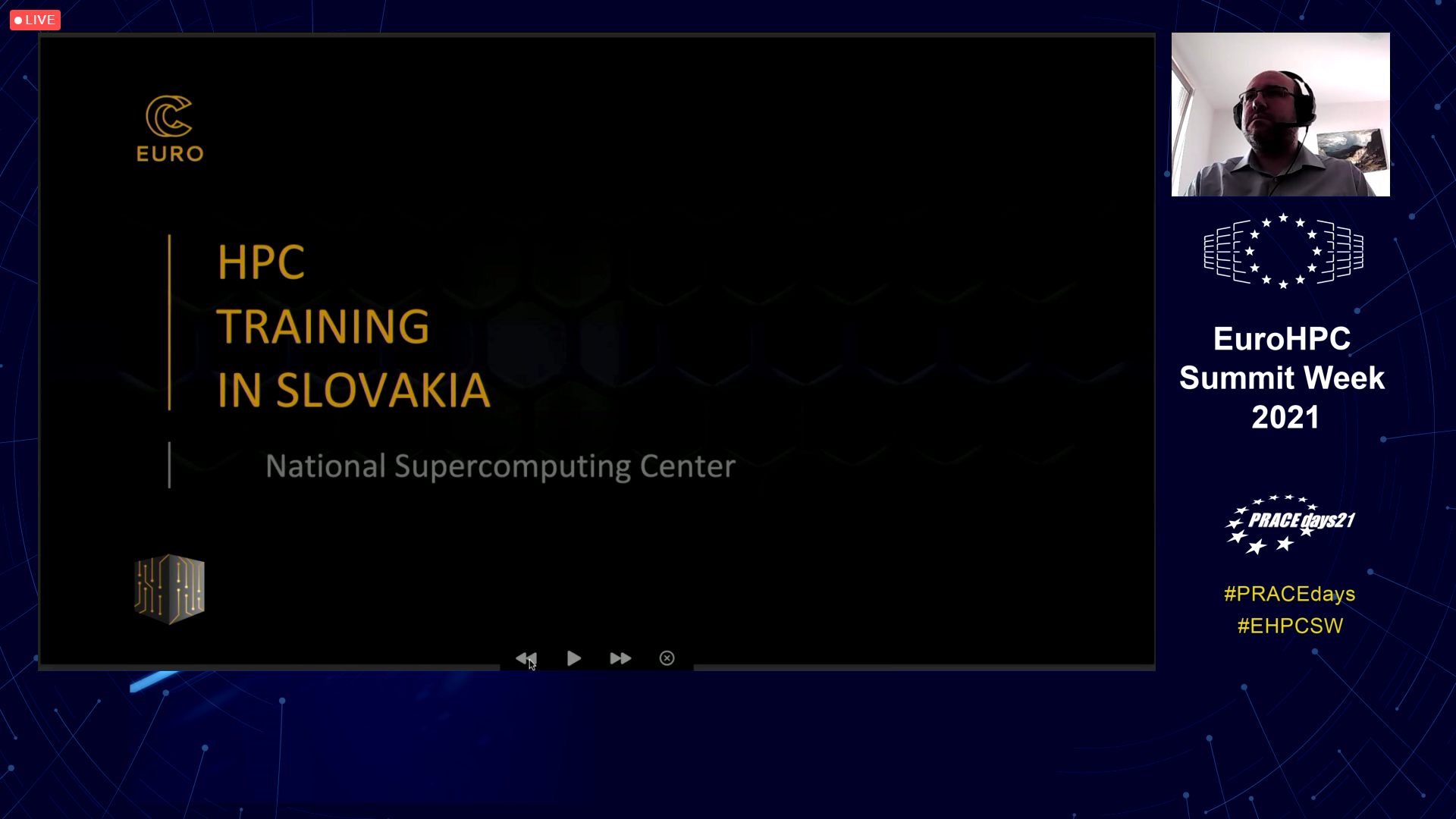
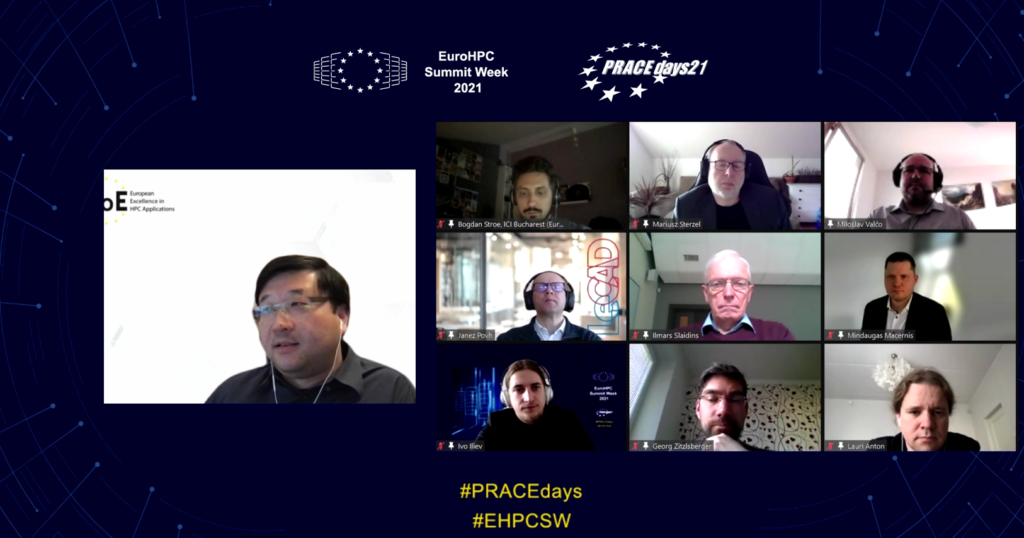
On March 26, 2021 the HPC training landscape in Slovakia was introduced at the EuroHPC Summit Week/PRACEdays2021 by Miloslav Valčo, the taskleader for the Training and Skills Development in the NCC Slovakia.

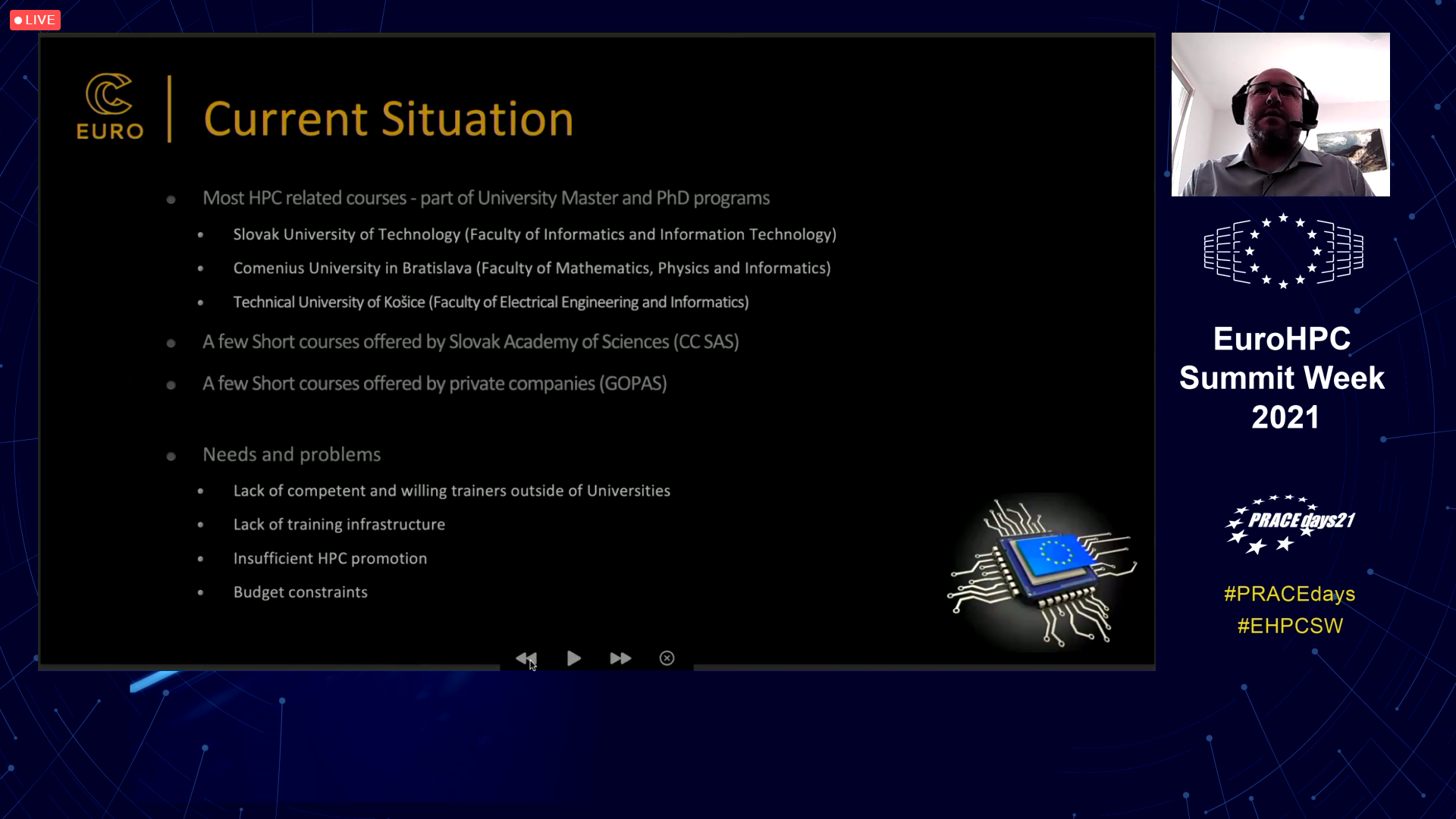
Training and skills development in HPC+ fields is one of the main areas the National competence centre and the EuroCC project focuses on. Currently, most of the HPC related courses are a part of Universities Master and PhD programme. Several courses are provided by the Computing Centre, Slovak Academy of Sciences and occasionally training activities in collaboration with the PRACE project are organized (Summer of HPC, seasonal schools). Only a limited number of courses (Parallel programing, Software engineering, Linux administration ) are offered by private companies and while useful, they are not usually focused on HPC specifically.

In Slovakia, among the main problems we face are lack of qualified trainers, lack of dedicated training infrastructure and of course, insufficient promotion and awareness.

While it is clear that HPC is playing an increasingly important role not only in academia, but in private and public sectors as well, the NCC Slovakia puts effort into expanding training activities. New courses, such as Parallel programming in C, C++, R, Python HPDA, Nvidia CUDA, Profiling and Optimization, Neural Networks, Virtualisation were added to the portfolio, with more to come.

The NCC Slovakia realizes the importance of awareness creation and promotion of HPC and HPC+ solutions and attracting experienced trainers as well as trainees. Through cooperation with local Universities and the National Supercomputing Centre the NCC Slovakia hopes to develop more complex services in HPC training in the future.

Keď AI klope na bránu teológie 11 Jun - Prečo umelá inteligencia patrí aj do teológie?
Nový recept na skrotenie slnečnej energie 11 Jun - Umelá inteligencia v spojení s čistou fyzikou dokáže predpovedať silu slnečného žiarenia rýchlejšie a lacnejšie než kedykoľvek predtým
Chceš študovať superpočítače? 7 May - Zvažuješ magisterské štúdium a láka ťa svet vysokovýkonných výpočtov, umelej inteligencie a dátovej vedy?
Kategórie
General

Summer of HPC: Neural networks in quantum chemistry

Summer of HPC: Neural networks in quantum chemistry

Join our team in Bratislava for the summer of 2021 and gain experience in programming neural networks and their usage in predicting molecular properties. PRACE partner countries and students studying at academic institutions in Europe have the opportunity to participate in summer internships at a HPC centre. Summer of HPC is a PRACE programme that offers summer placements at HPC centres across Europe to late-stage undergraduate and master’s students.

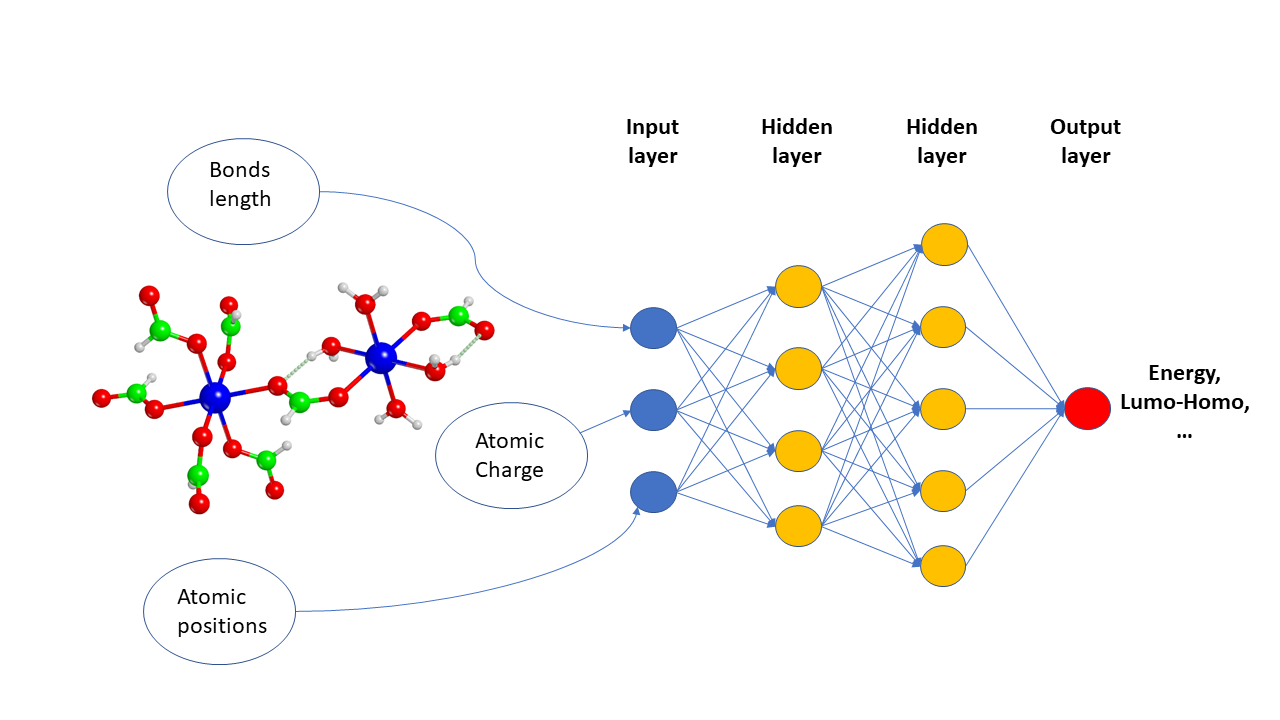
The main goal of this project is to investigate ability of NN frameworks to simulate molecular properties, where NN can emulate electronic wavefunction in local atomic orbitals representation as a function of molecular composition and atom positions or other molecular descriptors and representations. Our objective is to apply NN frameworks as predictor of molecular properties (energies, charges on atoms or evidence of hydrogen bonds) based on structural properties of these molecules (atomic positions). Implementation of NN frameworks will be performed using widely adopted TensorFlow library in Python code. For generation of molecular descriptors of chemical systems we apply DScribe library, which can be incorporated as a module directly in Python code. Next to the aforementioned “application part” of the project, we also plan to (in)validate the widely accepted fact, that GPGPUs are superior execution platform for NNs to CPUs.

Late-stage undergraduate and master’s students are invited to apply. Background in quantum-chemistry or physics is needed. We would alsowelcome advanced knowledge of fortran, basic knowledge of MPI, BLAS libraries and other HPC tools. Previous experience in HPC is not required as training will be provided. The most important attribute is a desire to learn, and share experiences with HPC.

Student will have access to the necessary learning material, as well as to our local IBM P775 supercomputer and x86 infiniband clusters.

The summer programme begins on July 1st and ends on August 30th 2021. At the end of the internship students present their projects and may win a prize for the best project!

Applications deadline is April 12th 2021.

Apply now

Training materials

More info about this project

Keď AI klope na bránu teológie 11 Jun - Prečo umelá inteligencia patrí aj do teológie?
Nový recept na skrotenie slnečnej energie 11 Jun - Umelá inteligencia v spojení s čistou fyzikou dokáže predpovedať silu slnečného žiarenia rýchlejšie a lacnejšie než kedykoľvek predtým
Chceš študovať superpočítače? 7 May - Zvažuješ magisterské štúdium a láka ťa svet vysokovýkonných výpočtov, umelej inteligencie a dátovej vedy?
Kategórie
General

Summer of HPC: Efficient Fock matrix construction in localized Hartree-Fock method

Summer of HPC: Efficient Fock matrix construction in localized Hartree-Fock method

Join our team in Bratislava for the summer of 2021 and gain experience in coding, implementation and testing of parallel ab initio programme. During the two month project students will learn about fortran and MPI environments. They will also get familiar with ideas of efficient use of tensor-contractions and parallel I/O in quantum chemistry algorithms. The goal is to push the efficiency of the MPI code(s) to maximum.

PRACE partner countries and students studying at academic institutions in Europe have the opportunity to participate in summer internships at a European High Performance Computing (HPC) centre. The Summer of HPC rogramme promotes young emerging talents in HPC, increases their awareness of HPC and supports them towards becoming HPC users.

Solution of independent-particle model (DFT or Hartree-Fock method) is one of the key targets of many quantum chemistry codes. Hartree-Fock method is iterative procedure which consist of two time-consuming steps. First, construction of Fock matrix from integrals and density matrix. Second, diagonalization of constructed Fock matrix.

Several years ago we effectively removed diagonalization step which was replaced by matrix-matrix multiplications. Very recently we implemented the solution of Hartree-Fock equations in localised orbitals, which opens the route toward a code applicable for very large molecules. Currently, Fock matrix construction is implemented only in a sequential mode. The aim of the project will be the effective implementation of parallel versions of the developed software.

Students are expected to cooperate on implementation and performance testing of Fock matrix construction. Two different approaches will be implemented and tested. First, BLAS version combined with OpenMP or MPI. Second we would like to implement Fock matrix construction using sparse matrix multiplications. Both algorithms will be implemented in local version of quantum chemistry program DIRCCR12OS which is mostly coded in fortran. It contains working MPI environment so students will be using several routines already implemented in the code.

Late-stage undergraduate and master’s students are invited to apply. Background in quantum-chemistry or physics is needed. We would alsowelcome advanced knowledge of fortran, basic knowledge of MPI, BLAS libraries and other HPC tools. Previous experience in HPC is not required as training will be provided. The most important attribute is a desire to learn, and share experiences with HPC.

Student will have access to the necessary learning material, as well as to our local IBM P775 supercomputer and x86 infiniband clusters.

The summer programme begins on July 1st and ends on August 30th 2021. At the end of the internship students present their projects and may win a prize for the best project!

Applications deadline is April 12th 2021.

Apply now

Training materials

More information about project

Keď AI klope na bránu teológie 11 Jun - Prečo umelá inteligencia patrí aj do teológie?
Nový recept na skrotenie slnečnej energie 11 Jun - Umelá inteligencia v spojení s čistou fyzikou dokáže predpovedať silu slnečného žiarenia rýchlejšie a lacnejšie než kedykoľvek predtým
Chceš študovať superpočítače? 7 May - Zvažuješ magisterské štúdium a láka ťa svet vysokovýkonných výpočtov, umelej inteligencie a dátovej vedy?
Kategórie
General

EuroHPC Summit Week 2021

EuroHPC Summit Week 2021

The EuroHPC Summit Week (EHPCSW) 2021 taking place online on March 22 – 26, 2021, will gather the main European HPC stakeholders from technology suppliers and HPC HPC infrastructures to scientific and industrial HPC users in Europe.

As in previous years, PRACE, the Partnership for Advanced Computing in Europe, organises the eighth edition of its Scientific and Industrial Conference (PRACEdays21) within the EHPCSW 2021. PRACEdays21 will bring together experts from academia and industry who will present their advancements in HPC-supported science and engineering. The EHPCSW 2021 will provide a great opportunity for the attendees to network.

The organisers of the EHPCSW 2021 are the Partnership for Advanced Computing in Europe (PRACE) and European Technology Platform for High-Performance Computing (ETP4HPC). The European Commission (EC) will represent the EuroHPC Joint Undertaking (EuroHPC ) in the organisation of the conference. The logistical organisation is supported by a local host: for the 2021 edition this will be Fundação para a Ciência e a Tecnologia – Computação Cientifica Nacional (FCT-FCCN).

Participation in the EuroHPC Summit Week 2021 including PRACEdays21 is free of charge and includes admission to all sessions, workshops, and tracks. here.

Keď AI klope na bránu teológie 11 Jun - Prečo umelá inteligencia patrí aj do teológie?
Nový recept na skrotenie slnečnej energie 11 Jun - Umelá inteligencia v spojení s čistou fyzikou dokáže predpovedať silu slnečného žiarenia rýchlejšie a lacnejšie než kedykoľvek predtým
Chceš študovať superpočítače? 7 May - Zvažuješ magisterské štúdium a láka ťa svet vysokovýkonných výpočtov, umelej inteligencie a dátovej vedy?
Kategórie
General

International Women's Day

International Women's Day

History of IWD

International Women's Day (IWD) is celebrated on March 8th around the world. It is a focal point in the movement for women's rights. The first National Women’s Day was observed in the United States of America on February 28th. The Socialist Party of America designated this day in honour of the 1908 garment workers’ strike in New York, where 40 000 women protested against working conditions. In December 1977, the United Nations General Assembly adopted a resolution proclaiming a United Nations Day for Women's Rights and International Peace to be observed on any day of the year by Member States, in accordance with their historical and national traditions.

International Women's Day is celebrated in many countries around the world. IWD is a day when women are recognized for their achievements without regard to divisions, whether national, ethnic, linguistic, cultural, economic or political. This day is a manifestation of solidarity between women and a reminder of the effort to equalize women and at the same time the longest revolution in our history.

In 1910, a second International Conference of Working Women second International Conference of Working Women was held in Copenhagen. A woman named Clara Zetkin (Leader of the 'Women's Office' for the Social Democratic Party in Germany) tabled the idea of an International Women's Day. She proposed that every year there should be a celebration on the same day in every country – an International Women's Day – to press for their demands. The suggestion received unanimous approval and thus International Women's Day was instituted.

The following year on March 19th, 1911, International Women's Day (IWD) was marked for the first time, by over a million people in Austria-Hungary, Denmark, Germany and Switzerland. In addition to the requirements for better working conditions, the right to vote, equal pay, etc. were also demanded. Since 1975, we have commemorated the IWD as a day of international solidarity of all women striving to achieve equality, justice, peace and development.

And what about IWD in Slovakia? The first IWD national holiday in Czechoslovakia took place in 1921 and a year later IWD acquired a mass character. During the Second World War IWD was abolished and subsequently renewed after 1945.

Women and IT

Women in the STEM fields (Science, Technology, Engineering and Mathematics), including information and communication technologies (ICT) are significantly under-represented.

  „IT sektor trpí globálnym chronickým nedostatkom IKT špecialistov. Ženy sú podreprezentované na všetkých stupňoch digitálneho sektora v Európe. Hoci práve digitálny sektor sa rapídne rozrastá a tvorí stovky tisícov nových pracovných miest každý rok, pomer žien v tomto sektore klesá. Napriek dopytu po IKT zručnostiach a rastúcej nezamestnanosti sa predpokladá, že EÚ bude trpieť nedostatkom digitálnych zručností už od roku 2020. 52% populácie EÚ sú ženy, avšak reprezentujú len 17% zo všetkých IKT špecialistov a zarábajú o 19% menej v porovnaní s mužmi pracujúcich na rovnakých pozíciach. S 13.7% zastúpením žien v tejto oblasti je Slovensko pod priemerom EÚ.“ According to he Ministry of Investments, Regional development and Informatization of the Slovak republic the IT sector is suffering from a global chronic shortage of ICT specialists. Women are under-represented at all levels of the digital sector in Europe. Despite the fact that the digital sector is growing rapidly, creating incrementally thousands of new jobs each year, the proportion of women in this sector is declining. Although there is a demand for ICT skills as well as rising unemployment, the EU is expected to suffer from a digital skills shortage by 2020. 52% of the EU population are women, but they represent only 17% of all ICT specialists and earn 19% less than men for the same work. In Slovakia, women only represent 13.7% of all ICT specialist, placing our country below the EU average.

According to the study of the European Commission  Women in the Digital Age the annual productivity loss for the European economy of women leaving their digital jobs to become inactive is calculated to be about 16.2 billion EUR.

The international project PRACE, in which Slovakia is represented by the Centre of Operations of the Slovak Academy of Sciences and which covers many of the HPC activities in Europe, brought attention to the examples of successful women working in this field in the Women in HPC publication. This publication is focuses on progress in the field of HPC and also on successful women in HPC sector. The number of women working in HPC is growing day by day, said Dr Sylvie Joussaume, the Chair of the PRACE Scientific Steering Committee.

In Slovakia, the AjTyvIT&nbsporganization contributes to improving the balance of women in the IT fields by organizing educational events and courses for girls and women.

An IT community portal - robimeit.sk – publishes interviews with women in IT, bringing inspirational stories to the audience.

The National Competence Centre for HPC in Slovakia we follow the equal opportunity standards and adhere strictly to the anti-discrimination principles. We hope to join in the effort to increase the number of women studying or working in the IT field in our activities during the following year.

UN Women announces the theme for International Women’s Day, March8th, 2021 (IWD 2021) as, “Women in leadership: Achieving an equal future in a COVID-19 world.” On this occasion, the National Competence Center for HPC in Slovakia would like to extend the best wishes to all women and men to find the courage to challenge and lead our society to a positive change.

Keď AI klope na bránu teológie 11 Jun - Prečo umelá inteligencia patrí aj do teológie?
Nový recept na skrotenie slnečnej energie 11 Jun - Umelá inteligencia v spojení s čistou fyzikou dokáže predpovedať silu slnečného žiarenia rýchlejšie a lacnejšie než kedykoľvek predtým
Chceš študovať superpočítače? 7 May - Zvažuješ magisterské štúdium a láka ťa svet vysokovýkonných výpočtov, umelej inteligencie a dátovej vedy?